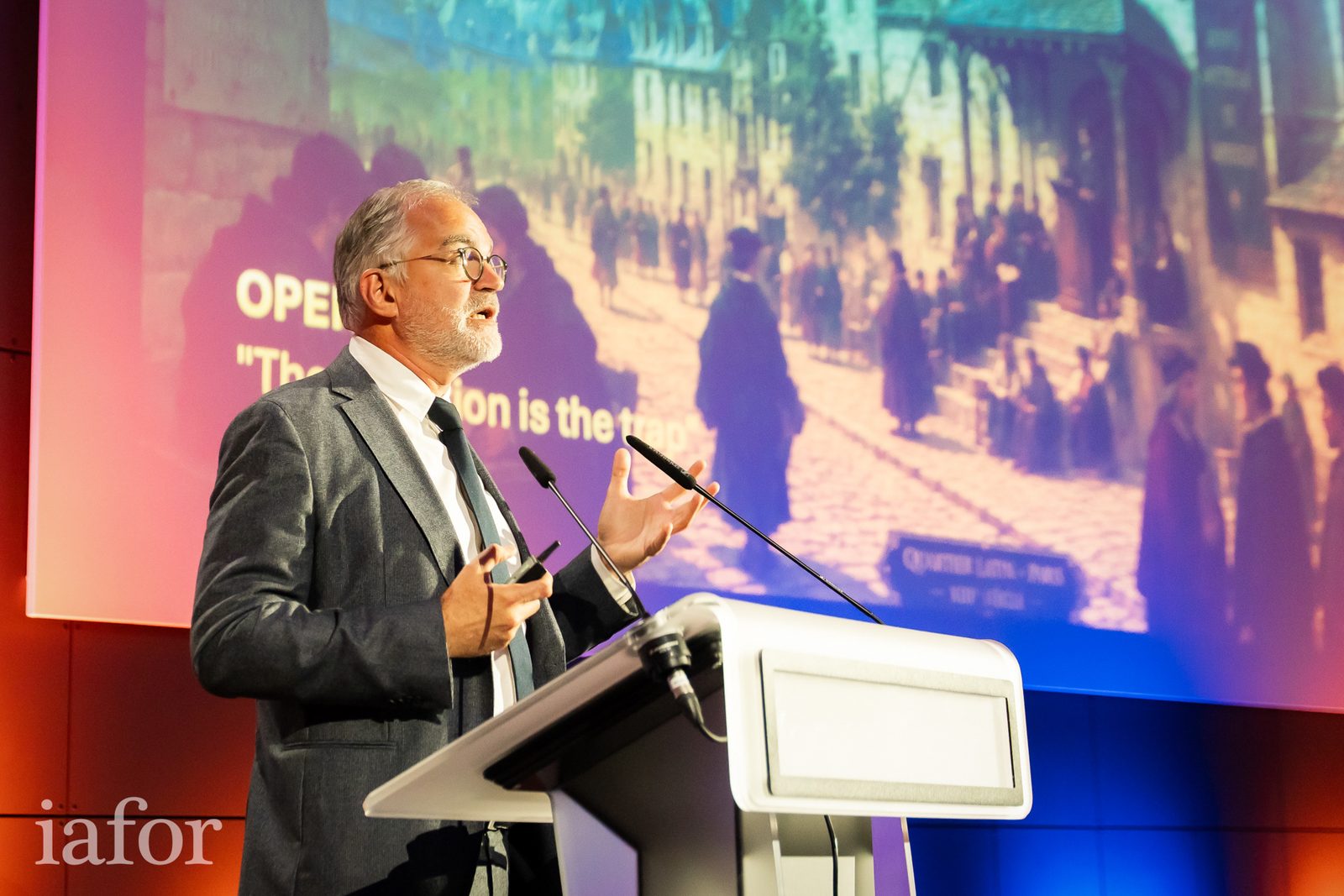
Humanities
A particular weight given to the humanities: not a heritage to defend, but the discipline that trains what AI makes essential. Understanding, interpretation and judgment.
Why the question is a trap
To ask how the humanities can be justified at the edge of AI is already to concede the argument. The question accepts a logic of utility and measurable return that the humanities exist precisely to question and to balance.
The real question is no longer whether they are useful, but what kind of humans we still want to become.
Keynote “How Can We Justify the Humanities at the Edge of AI?”, Paris Conference on Education and Paris Conference on Arts & Humanities (IAFOR), Sorbonne Université, plenary session of 15 June 2026. Watch the keynote on YouTube · Presentation on the IAFOR website.
An unexpected mirror
AI does not threaten the humanities: it clarifies them. It shows education the image of what it chose to value. For decades, schools and universities have trained people in abstraction, analysis, formal reasoning and procedural problem-solving, which are exactly the forms of intelligence machines now perform remarkably well. AI reveals how narrow that definition of intelligence had become.
Three capacities that calculation does not replace
Contextual intelligence
Reading what cannot be reduced to rules.
Reading the meaning of a situation that resists procedure, knowing its limits, adapting to an unfamiliar setting.
Cognitive lucidity
Seeing the bars of our own cage.
A clear view of the knower. Reasoning is never entirely detached from emotion, bias, assumption or social influence. Lucidity here draws on Bronner, Haidt and Spinoza: we often know what we want without knowing the causes that make us want it.
Wonder
Wonder as increase in being.
Not naïveté, but openness to a reality richer than our categories. In Spinoza, joy marks an increase in the power to act: the deepest educational experiences do not merely add knowledge, they enlarge the person who goes on learning.
From keynote to integrated intelligence
Extended with two Canadian scholars who attended the conference, Derek Gladwin and Naoko Ellis, the reflection became a co-written article, Integrated Intelligence in the Age of AI. It shifts the question: instead of the role of the humanities, the forms of integrated intelligence that higher education should cultivate in a complex, AI-shaped world.
Integrated intelligence is the capacity to draw on and connect several ways of knowing, analytical and creative, technical and ethical, relational and affective, in response to real situations. The humanities have long nurtured part of it, but no single discipline owns it. The case for integration is epistemic, not economic: it calls for more investment in these capacities, not less.
Four explorations structure the article: learning through integration, learning with AI, learning in a complex world, and learning to live with awe and wonder.
At the centre is judgment. It becomes necessary when rules are no longer enough, when context matters, values conflict and no procedure can settle the right response in advance. It has less to do with deciding than with readiness to answer for what one decides. Machines answer. Education teaches us to answer for.
Thinkers and ideas
In the keynote: Descartes, McGilchrist, Spinoza, Haidt, Bronner, Eliot. In the article: Snow and the two cultures, Bateson's transcontextual perspective, McGilchrist on attention, Spinoza, Keats's negative capability and Humboldt's ideal of Bildung.
A musical extension of this reflection follows: counterpoint as a model for an intelligence that holds several voices at once.
Music
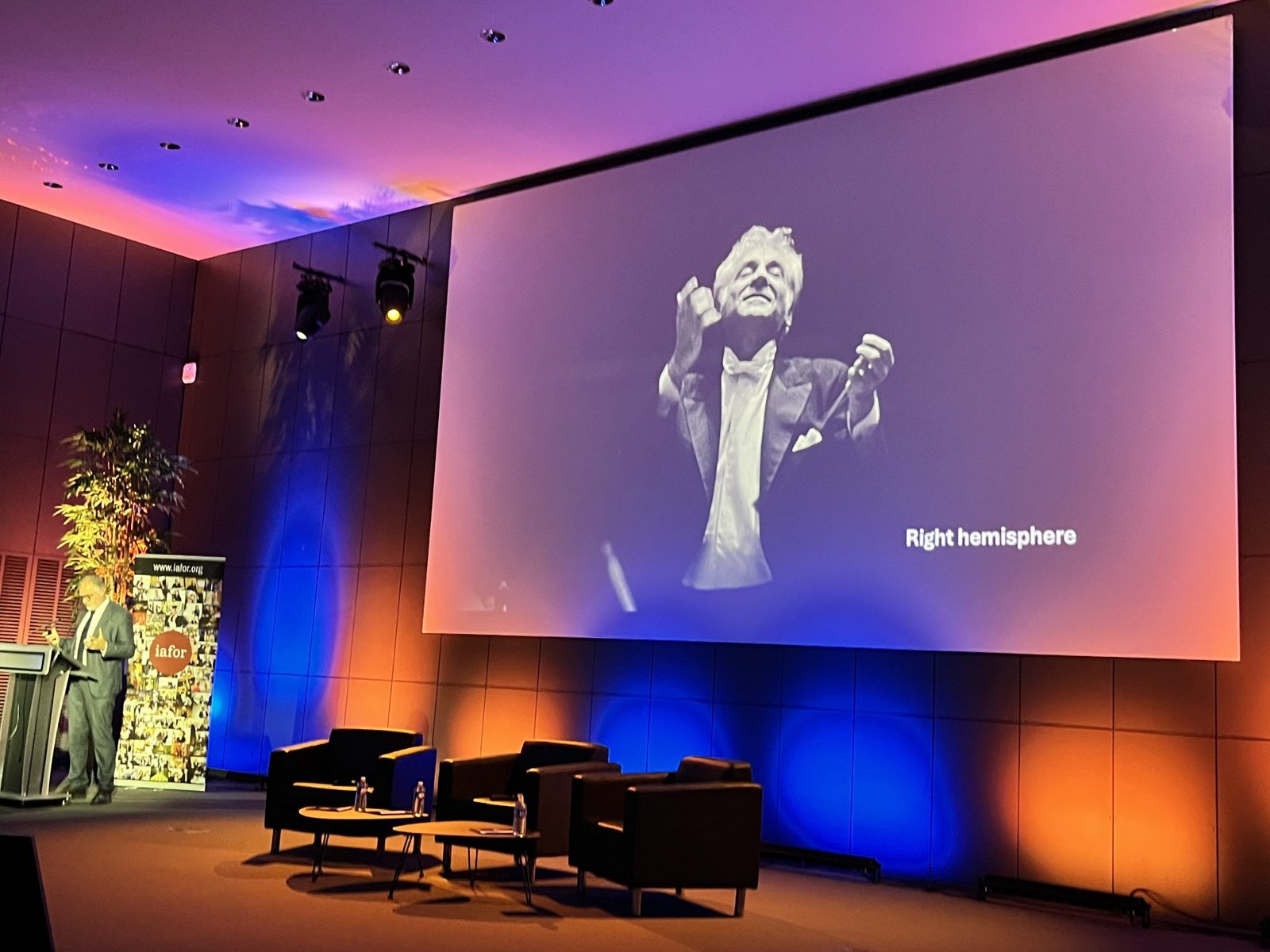
Counterpoint, or how several independent voices make sense together: a metaphor for thinking, a metalanguage for talking about judgment, and a source of inspiration for teaching.
In counterpoint, independent melodic lines sound together. Each keeps its own logic, and together they make sense. A pianist and composer, Olivier Guillet turns to it for two reasons: as a model of how good judgment thinks, and as a source of ideas for teaching it.
Counterpoint as a way of thinking
Several lines, no soloist
Most of the music people hear is a melody with an accompaniment. Counterpoint is different: every line matters, and none is mere background. The fugue takes the idea furthest. One voice states a subject, another answers, a third takes it up, and then all continue together. Bach’s The Art of Fugue builds an entire collection from a single theme.
It is a picture of unity that does not require uniformity. It is close to what Bakhtin called polyphony, a plurality of independent voices that do not merge, and to what Morin calls the dialogical principle: holding together terms that are at once complementary and antagonistic.
The rules govern the relations, not the content
Counterpoint is strict, but its rules say how voices relate to one another, not what each must say. The discipline frees the lines instead of confining them. Good judgment works much the same way: shared standards of rigour, and within them room for data and values, rules and context, one’s own view and other people’s.
Tension is not a mistake
Dissonance is not a fault to be removed. It creates a tension that seeks resolution, and the music depends on it. In thinking, doubt and contradiction are usually treated as problems to close as fast as possible. Counterpoint suggests another posture: staying with the tension long enough for something to resolve that no single line could have reached. That takes time, and time is what instant answers make scarce.
To answer, and to answer for
In the French vocabulary of the fugue, the second entry is called the réponse, the answer. It takes up the subject at another pitch, adjusted where needed so that the music stays in key: restating what was said while adapting to the place where one enters. Machines answer. Answering for adds the readiness to own what the answer commits one to.
Music as a source for teaching
Music has long been a school of attention, patience and discipline. Several of its practices carry over directly to education.
One voice at a time
The classical method for learning counterpoint, set out by Johann Joseph Fux in 1725, adds complexity step by step: one note against one, then two against one, and so on, each stage resting on the last. The same logic suits the teaching of judgment: constraints first, then freedom; one consideration, then two, then the whole.
Listening as a skill
A listener can follow the top line, or choose to follow an inner voice and hear the piece differently. Moving one’s attention on purpose, instead of being captured by whatever stands out, can be trained. It is also what separates examining a problem from reacting to its most visible feature.
Practice, not lectures about practice
Musicians learn by doing, with a teacher who listens and corrects. Judgment is learned the same way: through repeated, supervised practice. This is the premise behind assessment built on arguing out loud, justifying a line of reasoning and leaving a trace of one’s thinking.
Leadership without a conductor
In a fugue no voice leads for long. Each takes the subject in turn while the others support it. It is a useful image of the shared, rotating leadership that complex institutions need.
What listening does to attention
Polyphonic music has become a favoured testing ground for research on attention. Three findings are worth knowing.
Listening is two jobs at once
Disbergen, Zatorre and colleagues (2018), then Hausfeld and colleagues (2021), use polyphonic music to study how listeners separate voices into distinct streams and bind them back into a whole, and how much of this depends on the sound itself or on the listener’s intention.
The high voice wins by default
A recent EEG study (reviewed preprint, eLife) indicates that spontaneous attention is shaped by the superiority of the high voice and by melodic contour. Without an instruction, listening follows what stands out. Hearing the inner voices takes work.
Attentive listening is demanding
According to Janata, Tillmann and Bharucha (2002), listening attentively to polyphonic music recruits the circuits of attention and working memory.
Limits. These studies use varied protocols and stimuli, rarely whole Bach fugues, and none shows that “the brain thinks in counterpoint”. They support a more modest point: polyphonic listening is an exercise in distributed attention, memory and anticipation, which is also what hard judgments demand. For teaching, the implication is that attention can be trained, and that its default setting is not neutral.
From counterpoint to the work
The Ergo Sum course. Works are not used as illustrations: a tragedy, a novel, a film, two interpretations of the same piece of music force students to hold together reasons that oppose each other. Several voices, never a single straight line.
The Intelligence of Action. The six capacities (perceive, judge, imagine, connect, act, answer for) work like voices that judgment lets be heard together.
Integrated intelligence. The co-written article presented above in the humanities part is the institutional version of the same idea: teaching people to hold several ways of knowing together.
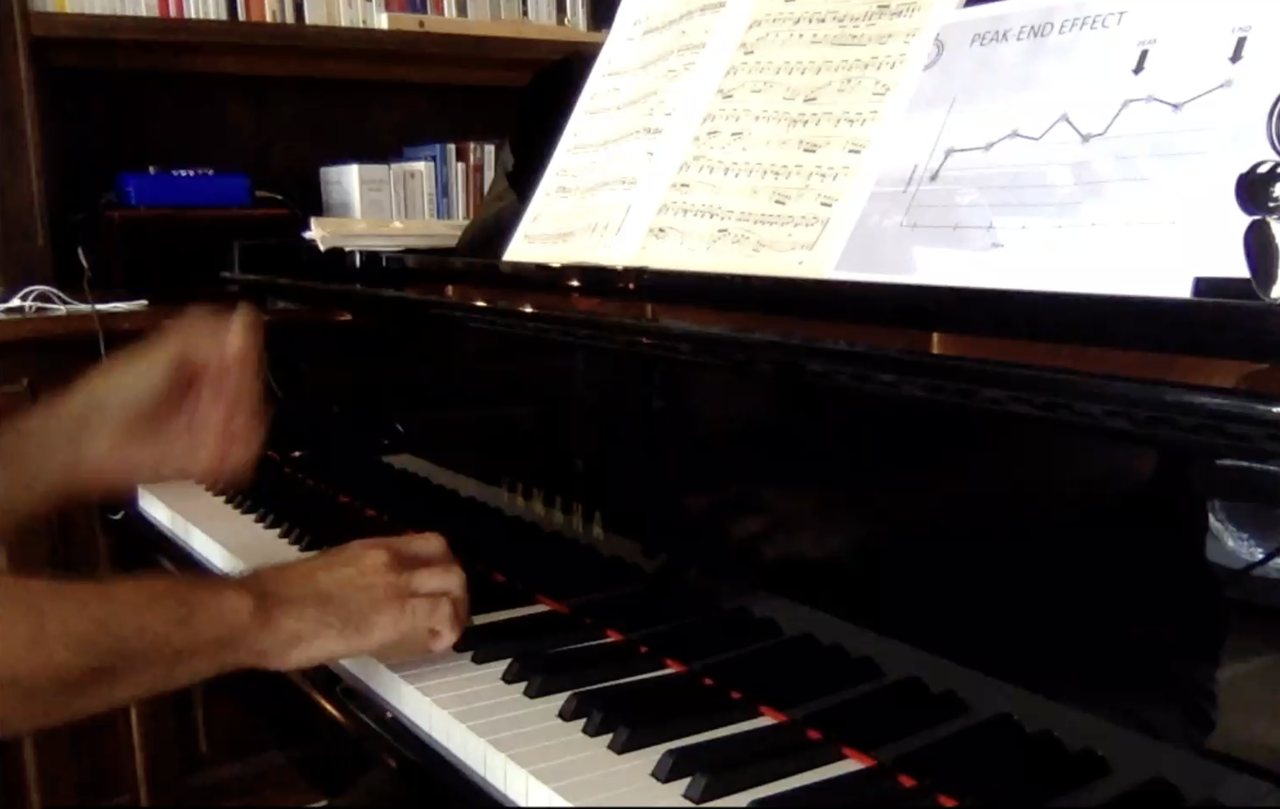
An example, on video.
Contrapuntal music news
A non-exhaustive selection, compiled on 25 November 2026. Links point to the sources.
On stage
-
7 Nov to 19 Dec 2026
“Un mois avec Bach”, Paris regional conservatoire A series of concerts and talks, from the opening concert on 7 November to the closing concert “Comme Bach” on 19 December.
-
30 Nov 2026
András Schiff plays The Art of Fugue, Festival international Bach Montréal Piano recital at the Maison symphonique, 7:30 pm.
-
18 Dec 2026
“Miroirs polyphoniques”, Maria Perrotta, Salle Cortot, Paris Bach's The Art of Fugue and two études by the contemporary composer Marco Di Bari, 8 pm.
Releases
-
13 Nov 2026
Benjamin Alard, complete Bach keyboard works, volume 12 (harmonia mundi) Two CDs pairing two early organ chaconnes, added to the BWV catalogue (BWV 1178 and 1179) by the Bach-Archiv Leipzig in November 2025, with the Well-Tempered Clavier.
-
17 Apr 2026
David Lively, The Art of Fugue on piano (Le Palais des Dégustateurs) Album released on 17 April 2026, reviewed in Pizzicato.
-
16 Jan 2026
Robert Costin, The Art of Fugue on organ (First Hand) Recorded on the Metzler organ of Trinity College Chapel, Cambridge, shaped as a journey towards the unfinished fugue.
References
- Disbergen, N. R., Valente, G., Formisano, E., Zatorre, R. J. (2018). Assessing top-down and bottom-up contributions to auditory stream segregation and integration with polyphonic music. Frontiers in Neuroscience, 12, 121. PMC5845899
- Hausfeld, L., Disbergen, N. R., Valente, G., Zatorre, R. J., Formisano, E. (2021). Modulating cortical instrument representations during auditory stream segregation and integration with polyphonic music. Frontiers in Neuroscience, 15, 635937. Frontiers
- Reviewed preprint, eLife: spontaneous attention and polyphonic music (high-voice superiority, melodic contour). eLife
- Janata, P., Tillmann, B., Bharucha, J. J. (2002). Listening to polyphonic music recruits domain-general attention and working memory circuits. Cognitive, Affective & Behavioral Neuroscience. PDF
- Fux, J. J. (1725). Gradus ad Parnassum.